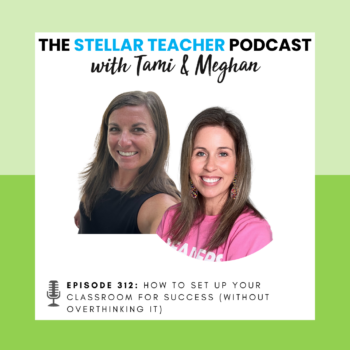
How to Set Up Your Classroom for Success (Without Overthinking It)
Social media often makes it seem like every classroom needs matching bins, coordinated décor, elaborate bulletin boards, and Pinterest-worthy displays. But the truth is that an effective classroom isn't built on decorations. It's built on systems, organization, and functionality.
In this episode of the Stellar Teacher Podcast, Tami is joined by fifth-grade teacher Meghan to discuss practical classroom setup ideas that help teachers create learning environments that actually work.
Together, they share why teachers should focus on classroom function before classroom décor and how thoughtful planning can reduce stress throughout the year. They also discuss why it's important to leave room for student work, anchor charts, and classroom growth instead of filling every wall before the first day of school.
Small Group Instruction in Upper Elementary: What It Is, Why It Matters, and How to Make It Work
Small group instruction is one of the most talked-about components of the literacy block—and often one of the most misunderstood.
Many upper elementary teachers feel pressure to meet with every student every week, maintain a rigid rotation schedule, or create entirely separate lessons for each group.... but effective small group instruction isn't about checking boxes or managing complicated systems. It's about providing targeted support based on what students actually need.
In this episode, we're wrapping up our Your Literacy Block series by taking a closer look at small group instruction and simplifying the process. We'll answer five essential questions...
3 Simple Writing Routines That Strengthen Reading Comprehension
Writing routines are often the literacy block component that gets pushed aside.
When many upper elementary teachers think about writing instruction, they think about essays, state testing, and lengthy writing projects. But writing can be so much more than that.
In this episode of our Your Literacy Block series, we're discussing why writing routines deserve a place in every literacy block—and how writing can be used to strengthen reading comprehension without requiring a separate writing block.
One of the biggest takeaways from this episode is that writing and reading are deeply connected. When students use writing routines to write about what they read, they revisit important ideas, organize their thinking, explain their understanding, and engage more deeply with the text.
[Listen Again] Why Reading Fluency Matters More Than You Think
When teachers think about reading fluency, they often associate it with primary grades. But the truth is that reading fluency remains a critical component of reading success long after students leave K–2.
In this episode, we're exploring why reading fluency is the bridge between decoding and comprehension and why upper elementary teachers should continue making fluency instruction a priority. You'll learn what reading fluency really is, how it impacts student comprehension, and the common signs that students may be struggling with fluency.
We'll also discuss practical ways to incorporate reading fluency practice into your literacy block without adding more to your plate.