






You Can Love Teaching and Still Want It to Be Easier
In this special 300th episode of The Stellar Teacher Podcast, Emily is joined by Tami to talk about a powerful truth that every teacher needs to hear: you can love teaching and still want it to be easier. Those two things are not in conflict, they can exist at the same time.

1 Thing Your Students Actually Need Right Now (AKA Strong Routines)
In this episode, Emily is joined by fellow Stellar Teacher team member and 5th grade teacher Meghan to talk about a mindset shift that can completely change how you approach your classroom: strong routines matter more than new ideas.
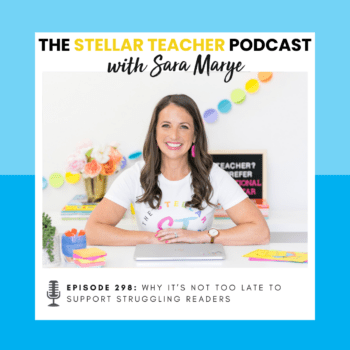
Why It’s Not Too Late to Support Struggling Readers
If you’ve reached April and are wondering if there is still time to support struggling readers... the answer is YES! In this episode of the Stellar Teacher Podcast, Sara explores a reality many teachers experience during the final months of the school year: student progress in literacy isn’t always linear.
As academic expectations increase in the spring, gaps in decoding, fluency, and foundational reading skills often become more visible. Passages get longer, questions become more complex, and students are expected to apply multiple literacy skills at once. Just because it is April does not mean you can't support struggling readers.
For students who still have underlying gaps, these higher demands can make reading feel more difficult—even if they’ve made progress throughout the year.
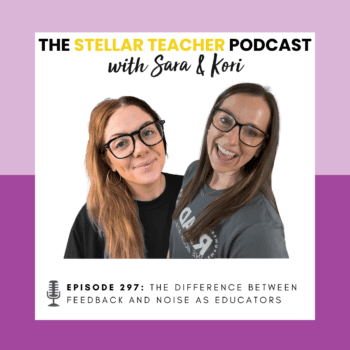
The Difference Between Feedback and Noise
Feedback is a constant part of teaching—but not all feedback is equally helpful. In this episode, Sara and Kori explore the difference between constructive teacher feedback and the “noise” that can sometimes surround the profession.
Whether feedback comes from evaluations, colleagues, professional development sessions, or even social media, teachers are often navigating a flood of opinions about what they should be doing in the classroom. The challenge is learning how to identify the feedback that truly supports professional growth while letting go of the noise that creates unnecessary pressure.